Formula 1 has always been a contest between engineers as much as between drivers. We have picked twelve ideas after which a racing car could never be the same again. Some became the standard for the whole grid, others were banned within months, and some of their authors simply managed to win while rivals were still arguing about the rulebook. The order is chronological: that way you can see how one revolution leads to the next.
1. Cooper: the engine behind the driver
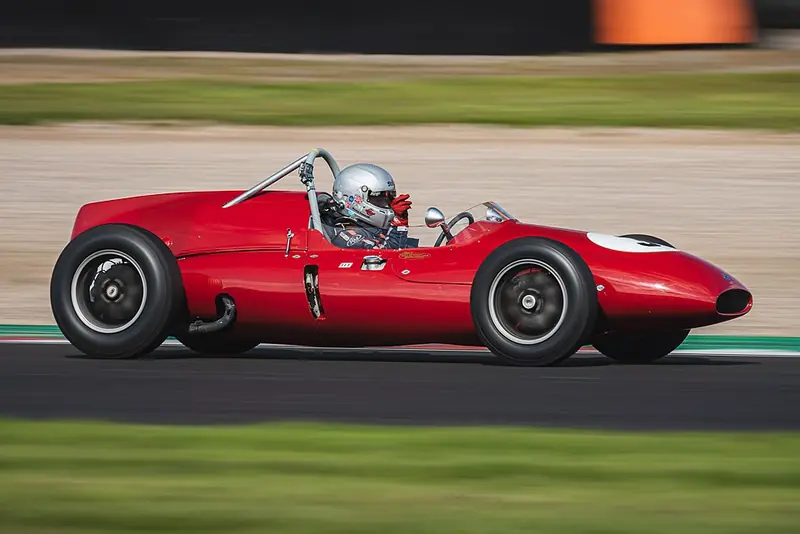
Cooper was run by John Cooper and his father Charles, and they were the ones who moved the engine behind the driver.1one source: 1 The logic was simple: with no propeller shaft running beneath the driver, he could sit lower and the car's frontal area shrank. Doug Nye of Motor Sport explains what that gain was worth:
"One square foot less frontal area was considered worth 25bhp."1one source: 1
The first world championship wins for cars with the engine behind the driver went to Cooper: Stirling Moss won the 1958 Argentine Grand Prix and Maurice Trintignant won Monaco that same season.140 The principle itself was not new: Auto Union had won with it in the 1930s.1one source: 2 In 1959 the Cooper T51 gave Jack Brabham the title and the team the constructors' crown, with five wins from nine rounds.1241 The season finale was pure cinema: at Sebring Brabham ran out of fuel and pushed the car himself for the last 400 yards.1one source: 1
What happened next: after 1960, no front-engined car won a championship race or a title again.1one source: 2
2. Lotus 25: a monocoque instead of a frame
Until 1962 a racing car was built on a tubular spaceframe. Colin Chapman did away with the frame: the Lotus 25's body was an aluminium structure that carried the loads itself.453 Chapman, incidentally, disliked the word "monocoque" and called his chassis a "bathtub", and similar load-bearing structures had already been seen in aviation and on the Jaguar D-type sports car.1one source: 3 But it was the Lotus 25 that made the principle the norm in Formula 1.452
The gain came in both weight and stiffness: the tub weighed around 32kg (70lb), against more than 100lb for the frame of its predecessor, the Lotus 24, and it was considerably stiffer.32 Its debut at the 1962 Dutch Grand Prix ended with Jim Clark only ninth.4542 The following season, though, he won seven of the ten races in the Lotus 25, scored the maximum possible 54 points and became champion, while Lotus took its first constructors' title.4543
What happened next: of the major teams, only BRM responded straight away, while Cooper, Brabham and Ferrari stuck with tubes for several more seasons.1one source: 3 Eventually the aluminium monocoque became everyone's standard for two decades.1one source: 2
3. Wings: air pushes the car down
Formula 1 borrowed the idea of an inverted wing pressing the car into the track from Jim Hall: his Chaparral sports cars had raced with a tall strut-mounted wing since 1966.672 Who brought it into grand prix racing first, however, is where sources disagree. F1.com and Autosport date it from Monaco 1968, where Chapman fitted the first aerodynamic surfaces to the Lotus 49B and Graham Hill won from Pole positionFirst place on the grid. It goes to the fastest driver in qualifying.In the glossary →.10244 Nigel Roebuck of Motor Sport holds that a grand prix car first raced with a wing at the next round, at Spa, on Chris Amon's Ferrari; Goodwood adds that a wing appeared on the Brabham there too.?sources disagree: 6810244
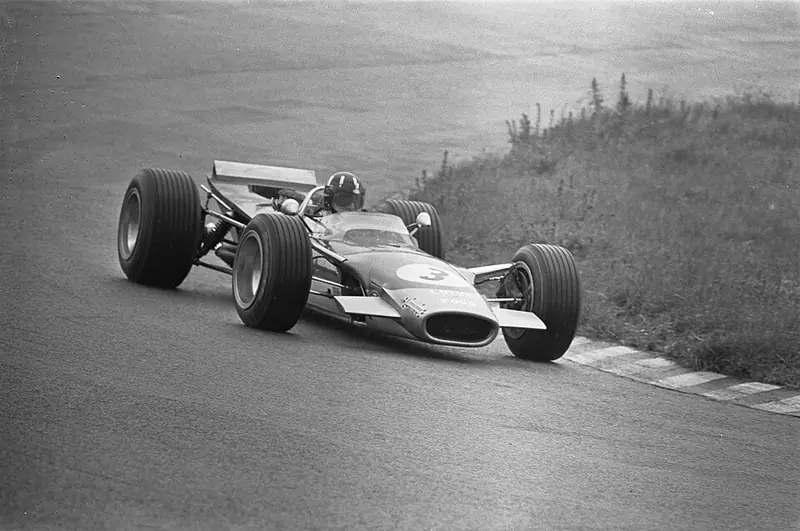
After Spa, high strut-mounted wings became a must-have, and lap times dropped by several seconds.1one source: 9 The price was steep: at the 1969 Spanish Grand Prix at Montjuïc the wings on both Lotus 49s collapsed, and Hill and Jochen Rindt had heavy crashes.98245
What happened next: at the very next round, in Monaco, the CSI, the governing body of the day, banned unrestricted wings in the middle of the weekend.98 Wings stayed, but designers moved to solutions integrated into the bodywork.1one source: 8
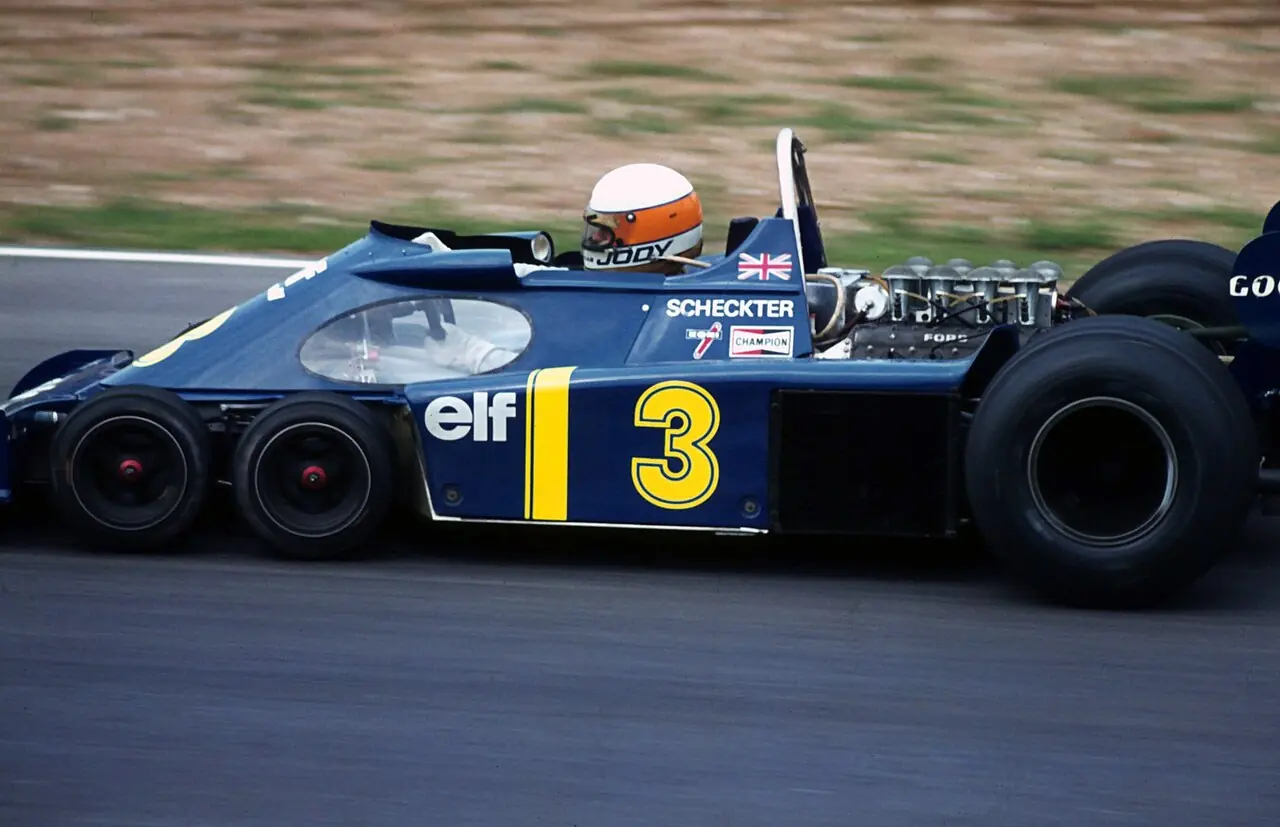
4. Tyrrell P34: six wheels
Tyrrell's chief designer Derek Gardner fitted four small front wheels in place of two large ones.111312 The aim was less drag and less front-end lift, so the front wing could be made more modest.1one source: 12 Gardner wanted nine-inch wheels; he and Goodyear settled on ten inches, "Mini-size".1one source: 12
The P34 made its debut at the 1976 Spanish Grand Prix at Jarama, the fourth round of the season.121311 Then at Anderstorp Jody Scheckter won the Swedish Grand Prix from pole, with Patrick Depailler finishing second.131146 It remains the only win for a six-wheeled car in Formula 1.1one source: 13 Scheckter remembers it fondly:
"It was a fun car to drive."1one source: 13
What happened next: in 1977 the project faded because of tyres. Gardner explained it like this:
"By 1977 Goodyear were supplying the whole of F1 but the tiny front tyres were for one team only."1one source: 12
At the end of 1977 Tyrrell abandoned the concept, and six-wheelers were later banned altogether.111213
5. Renault RS01: turbo
The rules of the time allowed turbocharged engines of half the capacity, 1.5 litres, alongside three-litre naturally aspirated engines.1one source: 14 Renault was the first to take this seriously: the RS01 made its debut at the 1977 British Grand Prix at Silverstone.141510 Its first race lasted 16 laps before Jean-Pierre Jabouille retired with a turbo failure.1447 Because of the clouds of steam and smoke whenever it broke, sceptics nicknamed the car the "yellow teapot".1one source: 15
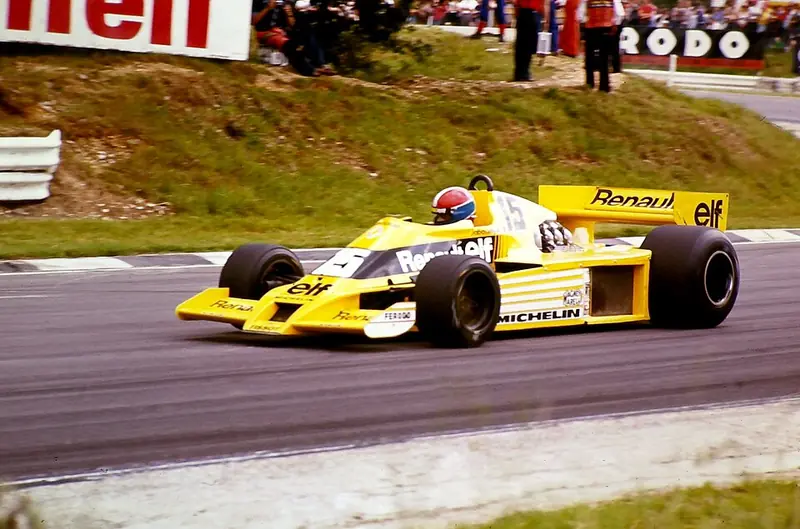
The win came on 1 July 1979: Jabouille won the French Grand Prix at Dijon, and it was the first victory for a turbo car.15249 He won in the RS01's successor, the RS10.1one source: 14
What happened next: everyone took up the turbo. In 1982 Ferrari won the first constructors' title with a turbo engine, and in 1983 Nelson Piquet in a Brabham BMW became the first world champion in a turbo car.21651 Renault itself never won a title in the turbo era.1one source: 2 At the end of 1988 turbos were banned as too powerful, too dangerous and too expensive.21417 They returned in 2014 as 1.6-litre hybrid V6s.217
6. Lotus 78 and 79: ground effect
Chapman's next idea was to turn the entire underside of the car into a wing. Lotus 78 designer Ralph Bellamy and Peter Wright found in the Imperial College wind tunnel that an inverted aerofoil close to the moving belt was literally sucked down onto it.1one source: 18 The Lotus 78's sidepods had a venturi profile, and skirts along the edges sealed the underbody so that the low pressure acted across its full width.1918 In 1977 the Lotus 78 won five races.1847
In 1978 came the Lotus 79. It made its world championship debut at Zolder, where Mario Andretti took pole and won.2048 Over the season Lotus won eight races, Andretti became champion and the team took the constructors' title.2019248
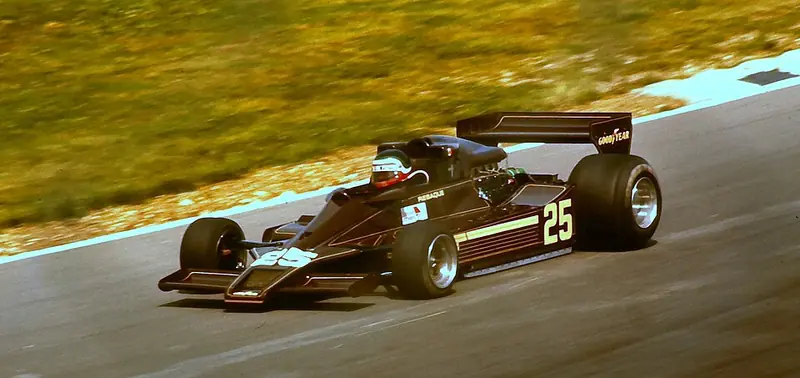
What happened next: in 1981, to rein in cornering speeds, sliding skirts were banned, and from 1983 flat bottoms became mandatory.221161917 Ground effect returned with the 2022 rules.1710
7. Brabham BT46B: the "vacuum cleaner"
Gordon Murray's Brabham BT46B had a large fan at the back that sucked air out from under the floor; skirts held the low pressure, and the car was pulled down onto the asphalt.23222 The official story sounded innocent: the fan was there to cool the engine.2223 Movable aerodynamic devices were banned, but the CSI measured that more than 55% of the fan's power went to cooling and declared the car legal.1one source: 23
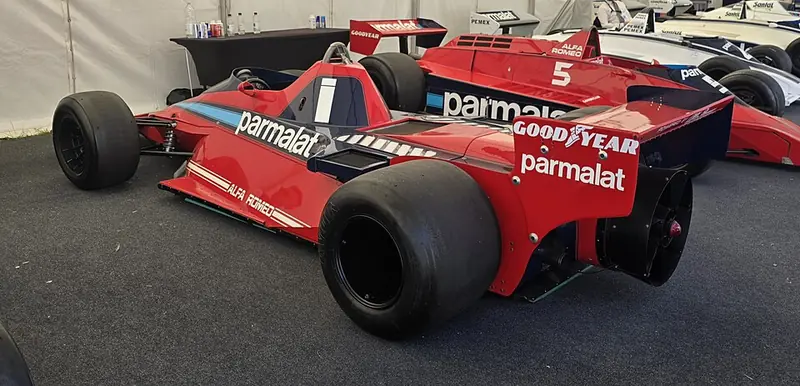
On 17 June 1978 at Anderstorp, Niki Lauda won the Swedish Grand Prix by 34 seconds.22248 That race remained the BT46B's only one.2223210 The final version of the fan went to Sweden untested, Murray recalls:
"I had just enough time to machine two hubs from solid aluminium."1one source: 23
What happened next: the car was not banned: Brabham owner Bernie Ecclestone withdrew it himself.1122232 The Race puts this down to politics, and Motor Sport also allows for that version: Ecclestone had just become head of the constructors' association FOCA and needed his rivals' support.2223 Rule changes that closed off the concept were in force from 1979.1one source: 23
8. McLaren MP4/1: the carbon-fibre monocoque
John Barnard needed a very narrow chassis. A steel monocoque proved too heavy, while carbon fibre was strong and light.1one source: 25 Barnard got his cue on a visit to British Aerospace at Weybridge.1one source: 25 The MP4/1's monocoque was made by the American company Hercules in Utah, and the first chassis was assembled from five major components.2426
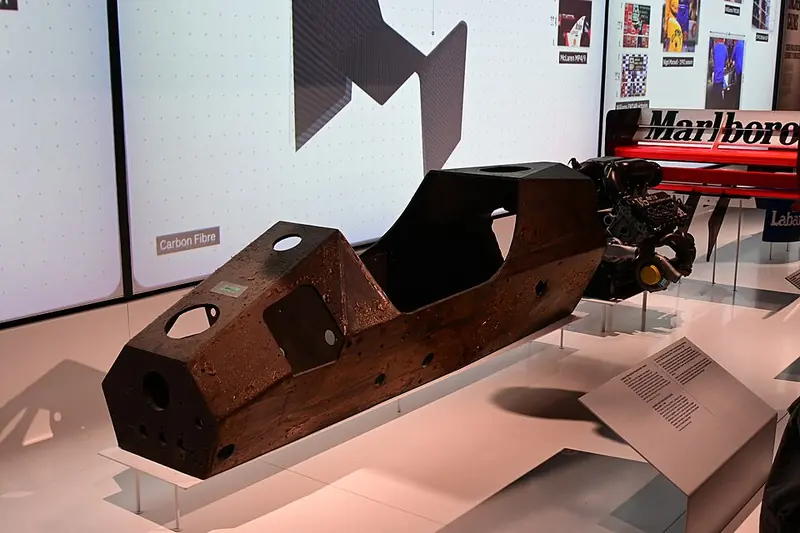
Whether McLaren was first depends on whom you ask. McLaren, Autosport and F1.com call the MP4/1 the first car with a monocoque made entirely of carbon fibre.?sources disagree: 24210 Lotus insists that its Type 88 with a carbon-fibre chassis came earlier, but protests from rivals meant it was never allowed to race.2126
On 18 July 1981 John Watson won the British Grand Prix in the MP4/1, McLaren's first victory since 1977.252450 The decisive argument came at Monza: in September Watson crashed the car at around 140mph and walked away unhurt.2524250 Barnard summed it up:
"That disproved all the knockers."1one source: 25
What happened next: carbon-fibre monocoques became the norm for the entire grid.1one source: 25
9. Ferrari 640: the semi-automatic gearbox
The 1989 Ferrari 640 was the first in Formula 1 to get a semi-automatic sequential gearbox, designed by John Barnard.27210 According to Motorsport.com, Barnard did it mainly for packaging and aerodynamic reasons: the cockpit could be made narrower.1one source: 27 F1.com and Autosport stress something else: the gearbox was put under less strain and the engine was not over-revved.102
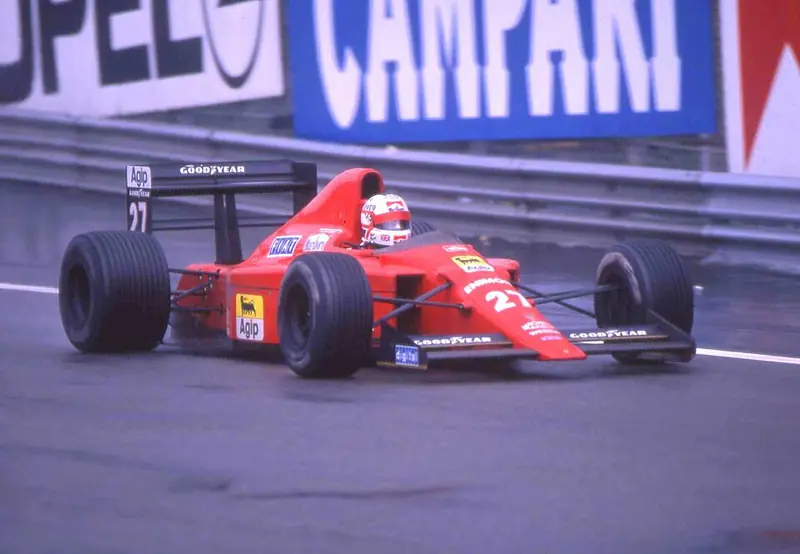
The system was raw. Gerhard Berger recalls:
"The downside was it never worked more than five laps."1one source: 28
Even so, on its debut at the Brazilian Grand Prix on 26 March 1989, Nigel Mansell started sixth and won.2721053
What happened next: for the better part of three decades every F1 car has run with steering-wheel paddles and a sequential gearbox.227
10. Williams FW14B: active suspension
Active suspension works through hydraulics with electronic control and adjusts the ride height at each corner of the car.2910 The father of the Lotus system was aerodynamicist Peter Wright; the Lotus 92 took to the track with it in 1983.3031 The first win for an active car came from Ayrton Senna in a Lotus at Monaco in 1987.23052
Williams brought the idea to perfection. Patrick Head explained that the main point was not a softer ride but control of the aerodynamic platform.1one source: 29 From 1990 development was led by Paddy Lowe.1one source: 29 In 1992 the FW14B took 15 poles in 16 races and 10 wins, Nigel Mansell became champion and Williams took the constructors' title.293154
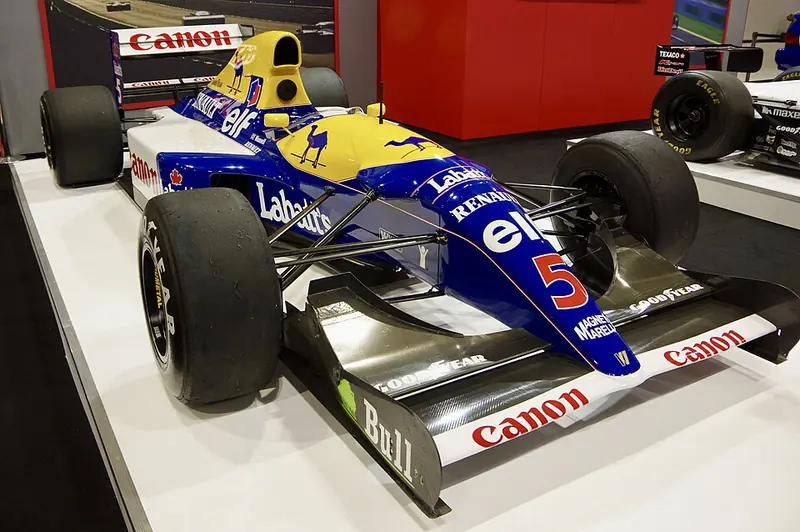
What happened next: from 1994 active suspension was banned along with other electronic driver aids.21017 According to Head, at Hockenheim in 1993 Max Mosley and Bernie Ecclestone gave team principals an ultimatum: agree to ban the new technologies.1one source: 29
11. Brawn BGP 001: the double diffuser
Brawn, Toyota and Williams read the 2009 rules literally: holes between the planes of the floor allowed air to be fed into a second, upper deck of the diffuser.343531 Accounts differ on who came up with the loophole. F1.com names junior aerodynamicist Masayuki Minagawa, Autosport a Japanese aerodynamics group within Honda, and Motorsport.com former Super Aguri designers.?sources disagree: 113435
Brawn GP grew out of the Honda team.1one source: 35 Its BGP 001 won on debut: Jenson Button took pole and victory at the 2009 Australian Grand Prix, with Rubens Barrichello second.1155 Rivals protested, but on 15 April 2009 the FIA International Court of Appeal ruled the Brawn, Toyota and Williams diffusers legal.3233 Brawn won eight of the seventeen races, Button became champion and the team took the constructors' title.3455
What happened next: rivals fitted their own versions over the course of 2009, and from 2011 the loophole was closed.3531
12. Halo: the titanium hoop
The halo is a titanium hoop over the driver's head weighing around 6–7kg.1one source: 36 Autosport links its arrival to the death of Jules Bianchi.1one source: 2 It became mandatory in 2018 and initially met strong opposition.36383739 The strength requirements are severe: among others, 116kN vertically downwards; at the Cranfield laboratory the hoop was tested to more than 100kN.3738 Mercedes' James Allison compared this to the weight of a London double-decker bus.1one source: 37
The halo passed its first serious test as early as 2018 at Spa: Fernando Alonso's car flew over Charles Leclerc, who was unhurt.3823756 In Bahrain in 2020 Romain Grosjean's car was split in half in the barrier, and the halo protected the driver's head.39382 Ross Brawn said:
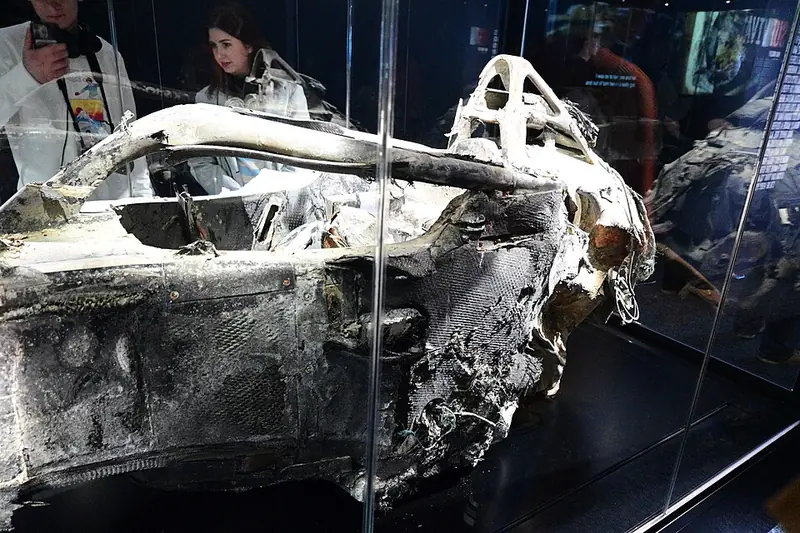
"There's absolutely no doubt the halo was the factor that saved the day."1one source: 39
Grosjean, who had once been against it, called the halo "the greatest thing we've brought to Formula 1".3938 And after his crash at Monza in 2021 Lewis Hamilton said: "Thank god for the halo. That ultimately saved me."1one source: 37
What happened next: in 2020 IndyCar got its own form of closed-cockpit protection, the aeroscreen.1one source: 2
One pattern keeps repeating in this list: what gets banned often comes back. Turbos have been back in F1 since 2014,217 ground effect since 2022.1710
Where the sources disagree
F1.com says wings debuted on the Lotus 49B at Monaco in 1968; Autosport that Chapman brought the idea to Monaco, while the real step came in Belgium with Brabham and Ferrari. Nigel Roebuck of Motor Sport holds that a grand prix car first raced with a wing at Spa in 1968, on Chris Amon's Ferrari, and Goodwood says both Ferrari and Brabham had wings there. [6, 8, 10, 2, 44]
Sources
Footnote numbers are the numbers of the sources in this list.
- Motor Sport Magazine, 2020-01-13: “Cooper T51: the revolutionary car that changed F1 forever (Doug Nye)”
- Autosport, 2022-04-22: “The 10 biggest innovations in Formula 1 history (Matt Kew)”
- Motor Sport Magazine, 2002-05: “A new frame of reference — Lotus 25 (John Tipler)”
- Lotus Cars (heritage): “Lotus Type 25”
- Goodwood Road & Racing, 2025-06-13: “The Lotus 25: A pioneering design to change F1 forever (Rachel Roberts)”
- Motor Sport Magazine, 1998-10: “1968 Belgian Grand Prix: Nigel Roebuck's F1 Legends”
- Motor Sport Magazine, 2026-04-28: “Doug Nye: how F1's early wing experiments pushed safety to the limit”
- Goodwood Road & Racing, 2025-03-03: “Winging it: When F1 really started to fly (Damien Smith)”
- 8W / Forix, 1999-03: “Adios aerofoils, enter aerodynamics (Mattijs Diepraam, Felix Muelas)”
- Formula1.com, 2025-03-05: “The 75 best drivers, cars, innovations, teams and key figures in F1 history”
- Formula1.com, 2026-04-09: “From a six-wheeled car to the 'flip-flop' wing – 8 of the wildest tech innovations (Anna Francis)”
- Motor Sport Magazine, 2011-02: “P34: The real story behind Tyrrell's six-wheeler (Nigel Roebuck)”
- Autosport, 2019-04-08: “The incredible story of F1's only six-wheeled winner (Adam Cooper)”
- Autosport, 2014-01-23: “F1's first turbo revolution (Edd Straw)”
- Autosport, 2023-02-08: “Jean-Pierre Jabouille obituary (Gary Watkins)”
- Formula1.com, 2018-08-14: “Tech Tuesday: The ground-breaking Brabham BT52 (Mark Hughes)”
- Motor Sport Magazine, 2024-06-06: “From turbo bans to the return of ground effect: F1's technical regulation timeline (Cambridge Kisby)”
- Motor Sport Magazine, 2007-08: “Lotus 78: the car that started F1's ground-effect revolution (Keith Howard)”
- Formula1.com, 2018-08: “Tech Tuesday: The Lotus 79, F1's ground effect marvel (Mark Hughes, Giorgio Piola)”
- Motor Sport Magazine, 2018-05-24: “Black gold: the Lotus 79's debut (Paul Fearnley)”
- Lotus Cars (heritage): “Lotus Type 88”
- Motor Sport Magazine, 2025-03-18: “75. 1978 Swedish GP: Brabham fan car wins its one and only race”
- The Race, 2022-12-24: “Nine things you may not know about Brabham's iconic F1 fan car (Edd Straw)”
- McLaren (heritage): “1981 Formula 1 McLaren MP4/1”
- Motor Sport Magazine, 2021-09-22: “John Barnard remembers his McLaren MP4/1 eureka moment (James Elson)”
- Autosport, 2020-04-13: “Banned: The ingenious twin-chassis Lotus F1 car (Matt Somerfield)”
- Motorsport.com, 2023-12-26: “The troubled Ferrari that was a game-changer for F1 (Matt Somerfield, Giorgio Piola)”
- Goodwood Road & Racing, 2024-04-14: “Gerhard Berger on the flawed genius of his 1989 Ferrari 640 (Ethan Jupp)”
- Motor Sport Magazine, 2012-03: “Williams FW14B's incredible active suspension: Mansell's perfect ride (Patrick Head)”
- Motor Sport Magazine, 2001-12: “Active suspension (Keith Howard)”
- Formula1.com, 2020-02-24: “From DAS to the double diffuser: 5 F1 innovations that caught rival teams napping (Greg Stuart)”
- Autosport, 2009-04-15: “FIA declares double diffusers legal (Jonathan Noble)”
- Sky Sports, 2009-04-16: “Trio cleared over diffusers”
- Autosport, 2013-12-15: “F1 2009-13 part two: Brawn and the double diffuser (Edd Straw)”
- Motorsport.com, 2021-10-18: “Banned: Why double diffusers were outlawed (Matt Somerfield, Giorgio Piola)”
- Formula1.com, 2018-03-05: “Tech insight: How the teams are developing the halo”
- Formula1.com, 2021-09-21: “Tech Tuesday: A close look at the halo (Mark Hughes, Giorgio Piola)”
- Motor Sport Magazine, 2020-12-01: “F1 halo is built to survive crashes bigger than Grosjean's (James Elson)”
- The Race, 2020-11-29: “Brawn certain halo saved Grosjean's life (Valentin Khorounzhiy)”
- Jolpica F1 API: “Jolpica F1 API: 1958 Argentine GP (r1) and Monaco GP (r2) results”
- Jolpica F1 API: “Jolpica F1 API: 1959 winners, driver and constructor standings”
- Jolpica F1 API: “Jolpica F1 API: 1962 Dutch GP results”
- Jolpica F1 API: “Jolpica F1 API: 1963 winners and standings”
- Jolpica F1 API: “Jolpica F1 API: 1968 Monaco GP (r3) and Belgian GP (r4)”
- Jolpica F1 API: “Jolpica F1 API: 1969 Spanish GP results”
- Jolpica F1 API: “Jolpica F1 API: 1976 Swedish GP results”
- Jolpica F1 API: “Jolpica F1 API: 1977 British GP results and 1977 winners”
- Jolpica F1 API: “Jolpica F1 API: 1978 Belgian GP (r6), Swedish GP (r8), winners and standings”
- Jolpica F1 API: “Jolpica F1 API: 1979 French GP results”
- Jolpica F1 API: “Jolpica F1 API: 1981 British GP (r9), Italian GP (r13); McLaren wins”
- Jolpica F1 API: “Jolpica F1 API: 1982 constructor and 1983 driver standings”
- Jolpica F1 API: “Jolpica F1 API: 1987 Monaco GP results”
- Jolpica F1 API: “Jolpica F1 API: 1989 Brazilian GP results”
- Jolpica F1 API: “Jolpica F1 API: 1992 winners and standings”
- Jolpica F1 API: “Jolpica F1 API: 2009 Australian GP, winners and standings”
- Jolpica F1 API: “Jolpica F1 API: 2018 Belgian GP / 2020 Bahrain GP schedule”