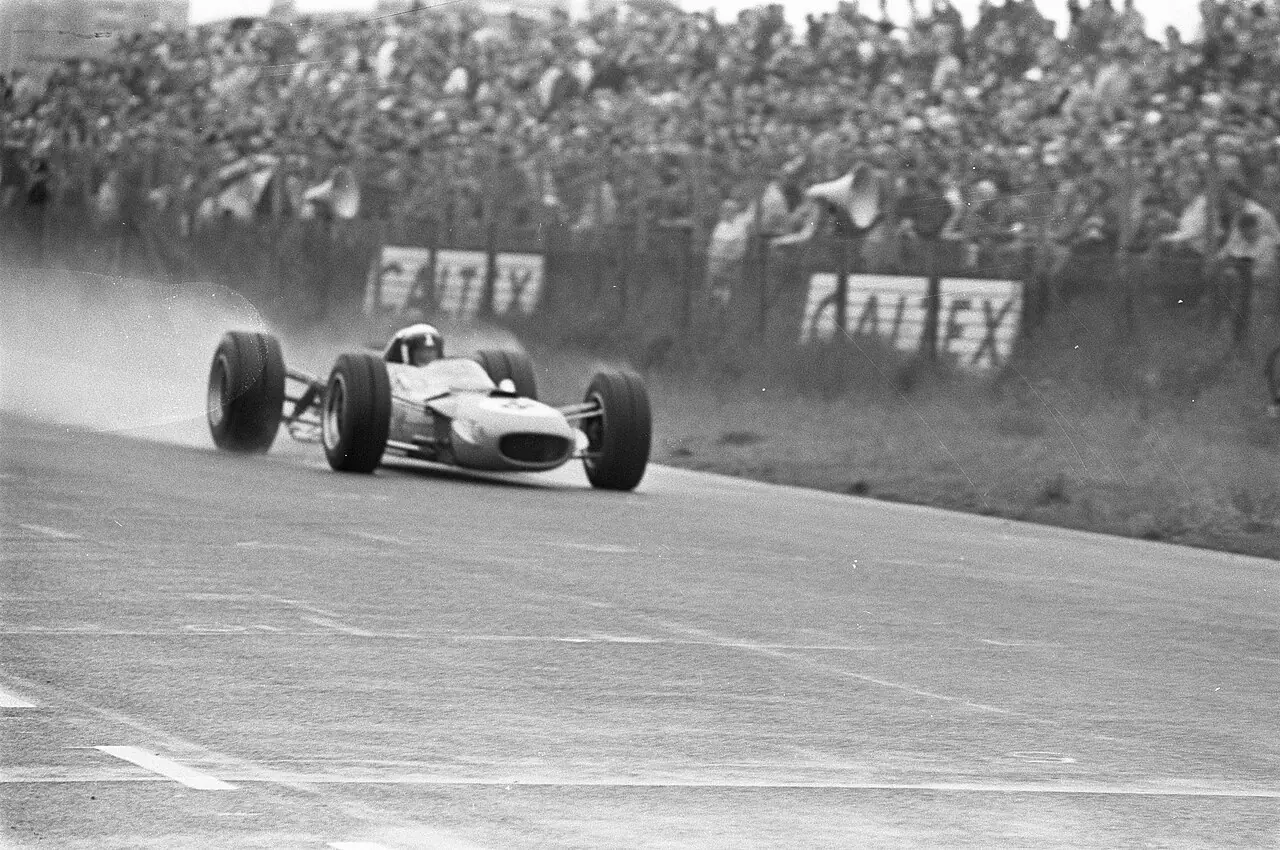
Flimsy cars, unforgiving circuits
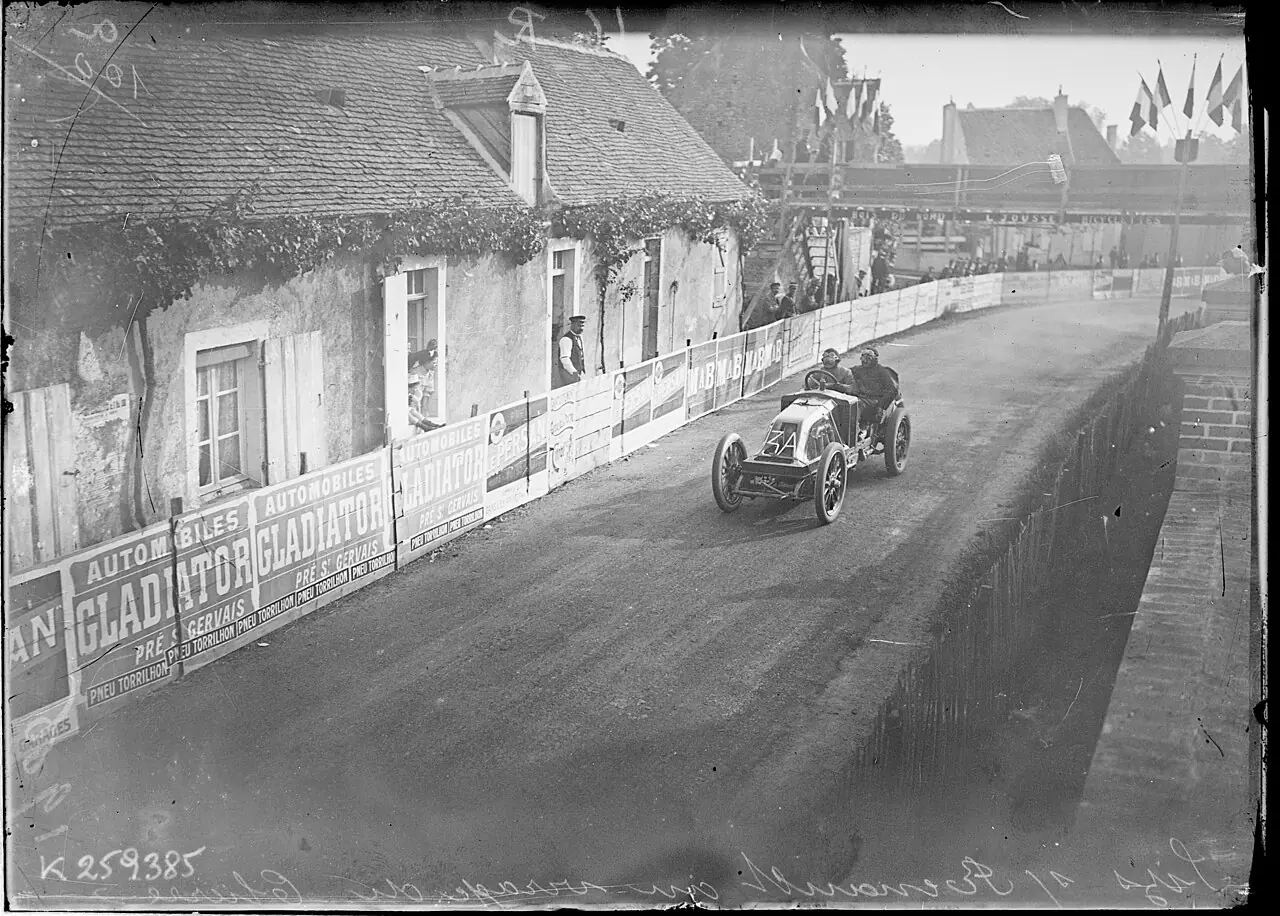
Motor Sport sums up the era in which Jackie Stewart raced in a single phrase: flimsy cars on ballsy circuits. Over his career Stewart lost dozens of friends to the sport; by Motor Sport's count, more than fifty.14 Among them was Jochen Rindt, who was killed at Monza in 1970.1one source: 1 The title that season still went to Rindt.105
This is the story of how Formula 1 became safer step by step: circuits, medicine, car design and drivers' equipment.
Spa, 1966: the crash that changed everything
On 12 June 1966, on the opening lap of the Belgian Grand Prix at Spa, a sudden downpour hit the circuit and Stewart's BRM went off the track.137 He was trapped in the wrecked car while fuel burned his skin.213 "There were no officials at all," Stewart recalled.23
He was rescued by Graham Hill, his BRM team-mate, and Bob Bondurant, who had both gone off on the same flooded stretch.2347 According to Jalopnik they had no tools, so they borrowed a wrench from a spectator, removed the steering wheel and pulled Stewart out.1one source: 3 From then on, the same outlet writes, Stewart taped a wrench to his steering wheel.1one source: 3
"It was at that time that I woke up to try and do something with the Grand Prix Drivers' Association."1one source: 2
Stewart pushed for seat belts and full-face helmets, even though he had first been against belts himself. "I thought seat belts were unnecessary and uncomfortable, at first," he admitted.43 The campaign made him enemies: part of the paddock and the press felt the drivers had taken too much power.13
Boycotts
The drivers' strongest weapon was refusing to race. In 1969 the Belgian Grand Prix at Spa did not take place: the circuit lacked the crash barriers the drivers had asked for.38
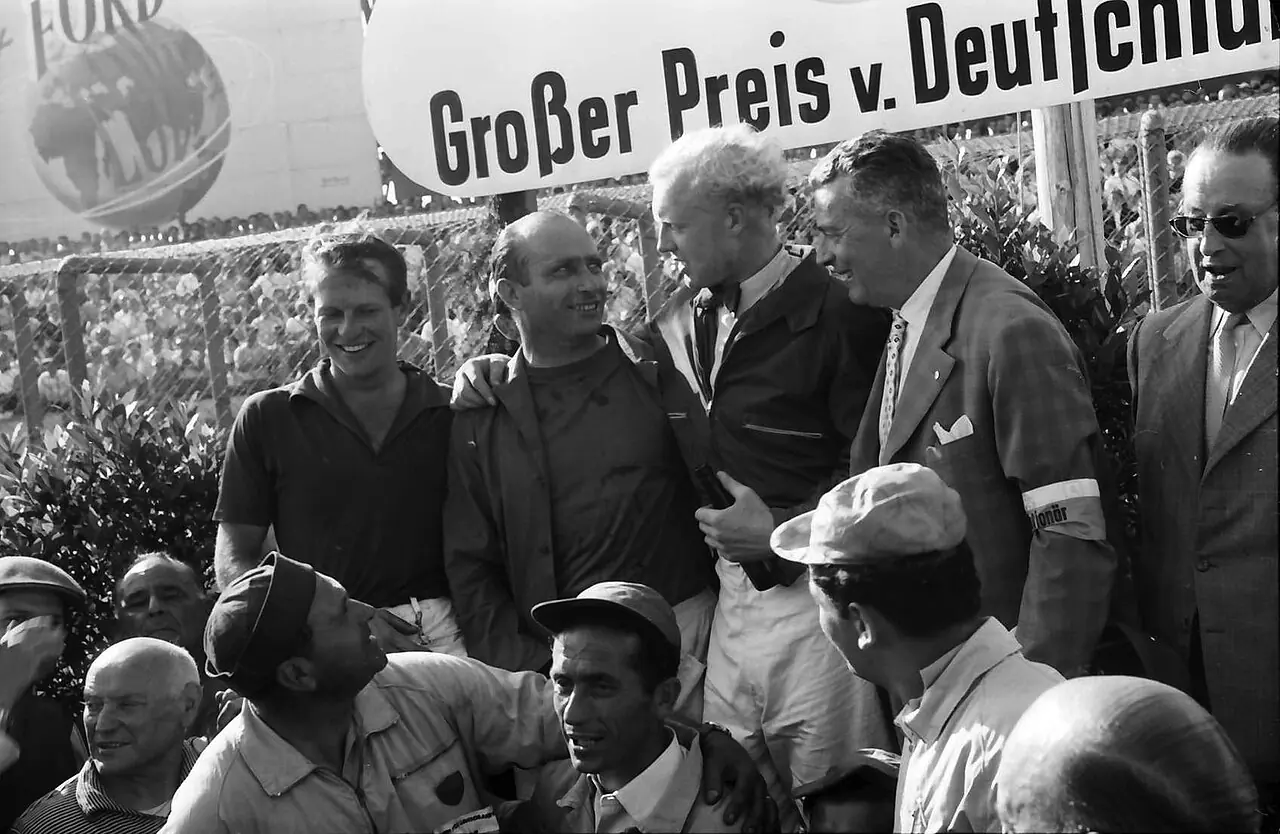
The following year it was the Nürburgring's turn. The organisers had not completed the promised safety work and the Grand Prix Drivers' Association refused to race there, so the 1970 German Grand Prix moved to Hockenheim for the first time.5639 Stewart made an impassioned plea to his fellow drivers not to race if the demands were not met.1one source: 6 Rindt won at Hockenheim.56
The Prof
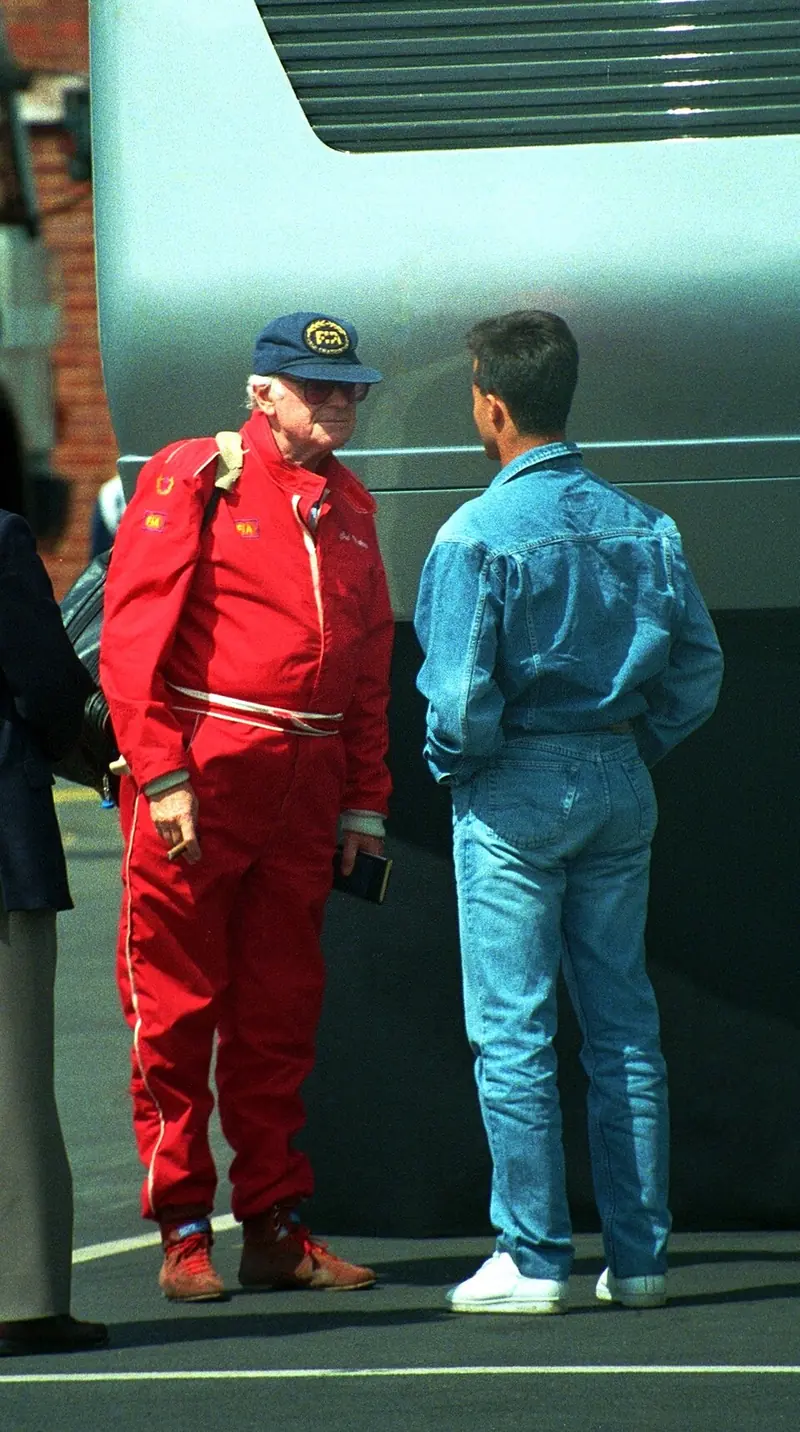
In 1978 Bernie Ecclestone offered neurosurgeon Sid Watkins the role of Formula 1 medical delegate.111312 Classic & Sports Car recalls that circuit medical centres at the time were often converted buses, with no anaesthetists on site.1one source: 13
In September 1978 Ronnie Peterson was killed after a crash at the start at Monza.111333 Afterwards Watkins insisted that on the first lap of every race he would ride in a fully equipped medical car, so he could reach any accident as quickly as possible.1one source: 13 He secured common standards for medical centres and a mandatory medical helicopter at every race.1112
Watkins spent 26 years in Formula 1.111213 Mika Häkkinen, Gerhard Berger and Rubens Barrichello are among the drivers he is credited with helping to save.1112 His hardest weekend was Imola 1994, where Roland Ratzenberger and Ayrton Senna, a close friend of the Prof, were killed.111315 After Imola Watkins chaired the FIA Expert Advisory Safety Committee and later became the first president of the FIA Institute for Motor Sport Safety.111412 He died in September 2012, aged 84.111213
Carbon fibre and crash tests
In 1981 John Barnard's McLaren MP4/1 became the first Formula 1 car with a monocoque made entirely of carbon composite.192021 Monza won over the sceptics: at the 1981 Italian Grand Prix John Watson crashed his MP4/1 at around 140mph (roughly 225km/h) and walked away.192022
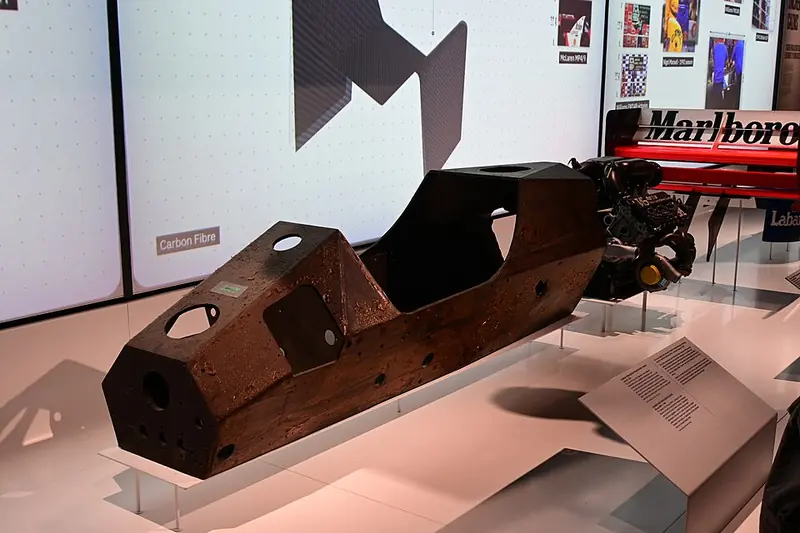
Before 1985 no crash tests were required at all; that year a frontal impact requirement arrived, and tests were added and tightened year after year.1one source: 18
The real turning point came after Imola 1994. The FIA went straight to work on circuits: computer analysis identified 27 high-risk corners at F1-grade tracks, Pit laneThe separate road along the pits. A speed limit applies there.In the glossary → speed limits were reduced and helmet standards were tightened.1one source: 15 In 1996 came higher cockpit sides and side headrests, in 1998 a requirement that a driver must be able to get out of the car within 10 seconds, and in 1999 tethers to keep the wheels attached.1one source: 15
HANS and the Halo
The HANS device, which supports the head and neck in an impact, was designed by engineer Robert Hubbard; the idea came from his relative, sportscar racer Jim Downing.1one source: 16 In Formula 1 it became mandatory from 1 January 2003.1517 According to the FIA, HANS has virtually eliminated catastrophic injuries to the craniovertebral junction, previously a common cause of death in racing.1one source: 16 The FIA writes that HANS played a key role when Robert Kubica had his huge crash at the 2007 Canadian Grand Prix.1one source: 16
The head remained the most exposed part. In qualifying for the 2009 Hungarian Grand Prix Felipe Massa was hit by a spring and suffered a fractured skull.2415 From 2011 the FIA required helmets to be reinforced above the visor with a Zylon panel.1one source: 15
On 5 October 2014, at the Japanese Grand Prix at Suzuka, Jules Bianchi suffered a severe crash; he died on 17 July 2015.311532 After his accident the FIA introduced the Virtual safety carVirtual safety car (VSC)No safety car on track, but every driver has to slow down.In the glossary →, which since 2015 has forced all drivers to slow down.3015 In 2017 The Guardian noted that Bianchi was the only driver killed on track in Formula 1 since 1994.1one source: 24
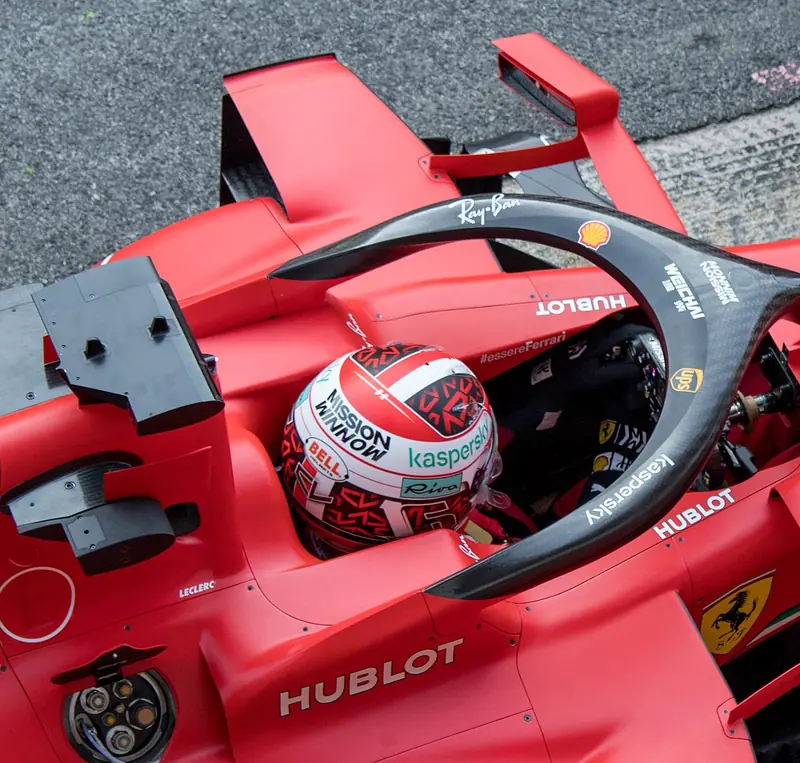
Head protection was the next step. The Halo, a hoop over the cockpit, was unpopular: at the F1 Strategy Group meeting in July 2017, according to The Guardian, only one team supported it. The FIA answered with numbers: by its figures, the Halo increases the chance of surviving a crash by 17%.1one source: 24 The device became mandatory from the 2018 season.152325
The test came quickly. On the first lap of the 2018 Belgian Grand Prix Fernando Alonso's McLaren was launched over Charles Leclerc's Sauber, and the Halo appeared to protect Leclerc.1one source: 25 After the season FIA president Jean Todt said the Halo "demonstrated it was a good decision".1one source: 25
Bahrain, 2020: 27 seconds
On 29 November 2020, on the first lap of the Bahrain Grand Prix, Romain Grosjean's Haas hit the barrier at 192km/h with a peak load of 67g.26272829 The car split in two and caught fire, and the survival cell pierced the barrier.262728
The FIA Medical Car reached the scene within 11 seconds.1one source: 26 Grosjean got out unaided and was clear of the car 27 seconds after impact, with burns to his hands.2627 The FIA concluded that the helmet, HANS, harness, survival cell, seat, headrest and Halo all performed as they should.2627
The investigation into that crash triggered another large-scale safety review, and after Zhou Guanyu's car flipped at Silverstone in 2022, where the Halo again protected the driver, the FIA strengthened the requirements for roll hoops.1one source: 15
Stewart, who once lay in a wrecked BRM with no marshal in sight, puts modern Formula 1 like this:
"But now, we have a cockpit of a car that's a survival cell. We've never been better prepared."1one source: 2
Sources
Footnote numbers are the numbers of the sources in this list.
- Motor Sport Magazine, 2022-06-10: “Jackie Stewart: the Flying Scotsman — Chapter One: Formula 1, speed, success and safety (Paul Fearnley)”
- Motorsport Network (Motorsport.com), 2025-08-26: “How Graham Hill and Bob Bondurant saved Sir Jackie Stewart's life at the 1966 Belgian GP (Lydia Mee; Stewart at an F1 champions round table)”
- Jalopnik, 2025-10-12: “How Jackie Stewart Taping A Wrench On The Steering Wheel Made F1 Safer (Nishant Jayaram)”
- The Drive, 2021-10-23: “How F1 Legend Jackie Stewart Became a Powerful Racing Safety Advocate (interview)”
- Formula 1: “Moments in time – The German Grand Prix”
- Motor Sport Magazine, 2014-04: “The way we were — 1970 season (Mark Hughes, April 2014 issue)”
- Jolpica F1 API, 1966-06-12: “1966 Belgian Grand Prix — results (round 2)”
- Jolpica F1 API: “1969 season calendar”
- Jolpica F1 API: “1970 season calendar”
- Jolpica F1 API: “1970 final drivers' standings”
- Motorsport Network (Autosport), 2012-09-13: “Former F1 medical delegate Sid Watkins dies aged 84 (Jonathan Noble)”
- Fox News, 2012-09-13: “Longtime F1 medical chief Sid Watkins dies at 84”
- Classic & Sports Car, 2012-09-13: “Grand Prix world mourns 'The Prof'”
- FIA, 2012-09: “FIA and FIA Institute Statement of Condolence (Professor Sid Watkins OBE 1928–2012)”
- FIA, 2024-05-15: “Legacy of Safety – How the FIA responded to the tragedy of Imola 1994 and launched a drive for safer racing”
- FIA: “AUTO+ Medical – Safety in our HANS”
- Crash.net, 2002-06-26: “HANS made compulsory for 2003”
- The Race, 2022-01-20: “What happens in an F1 crash test? Gary Anderson's guide”
- McLaren, 2023-12-14: “1981 Formula 1 McLaren MP4/1 (heritage)”
- Motor Sport Magazine, 2021-09-22: “John Barnard remembers his McLaren MP4/1 eureka moment”
- Motorsport Network (Motorsport.com), 2021-04-12: “The car that changed Formula 1 history”
- Jolpica F1 API, 1981-09-13: “1981 Italian Grand Prix — results (round 13)”
- The Drive, 2017-09-22: “FIA Formally Finalizes F1's Halo as Mandatory for 2018”
- The Guardian (via Yahoo News UK), 2017-07-22: “FIA defends decision to enforce F1 halo cockpit protection device for 2018 (Giles Richards)”
- Crash.net, 2018-12-10: “Todt: Halo justified its introduction in F1 2018 (Lewis Larkam)”
- FIA, 2021-03-05: “FIA completes investigation into Grosjean's Bahrain accident (findings)”
- Sky Sports, 2021-03-05: “Romain Grosjean accident findings published by FIA with fiery Bahrain GP crash measured at 67G”
- The Race, 2021-03-05: “Grosjean Bahrain F1 crash investigation findings revealed”
- Jolpica F1 API, 2020-11-29: “2020 Bahrain Grand Prix — results (round 15)”
- Formula 1, 2015-01-09: “FIA clarifies new virtual safety car procedures”
- Speedweek, 2026-07-17: “Jules Bianchi: How the death of the Ferrari protégé changed Formula 1”
- Jolpica F1 API, 2014-10-05: “2014 Japanese Grand Prix — results (round 15)”
- Jolpica F1 API, 1978-09-10: “1978 Italian Grand Prix — results (round 14)”