For most of Formula 1's history there was no limit on spending: whatever money a team could find went into the car. That changed in 2021. Here is how the budget cap works, where its numbers came from and what awaits a team that breaks it.
The long road to a limit
There had been earlier attempts to rein in costs. In October 2015 the FIA said it had studied a "global cost ceiling" but that the conclusions were not definitive, and Ferrari used its veto to block a maximum price for engines supplied to customer teams.1one source: 1
The breakthrough came on 31 October 2019. That day the 2021 rules were unveiled, and for the first time in F1 history they included financial regulations with a spending cap: $175m a year.234 The figure assumed a 21-race season, with $1m added for each extra race.34 FIA president Jean Todt did not pretend the limit was tight:
"Of course $175m is still a high figure, plus all the extras around, but we consider it as a first step."1one source: 3
Ross Brawn, then described as the boss of Formula 1, promised the rules would bite:
"But this has teeth. If you fraudulently breach the financial regulations, you will be losing your championship."1one source: 3

The pandemic cut the number
The $175m figure never took effect. On 27 May 2020 the FIA World Motor Sport Council, voting electronically, lowered the cap to $145m for 2021, $140m for 2022 and $135m for 2023–2025, again based on 21 races.56 The FIA said the decision was driven by the need to reduce costs and safeguard the sport during the COVID-19 pandemic.56
The broader aim was a more competitive championship, a more level playing field and financial stability for the teams. The FIA itself describes its financial rules as a tool to close the competitive gap on the grid.615
How the figure is calculated
The cap is not a single number but a formula with adjustments. Under the 2021 regulations, each race above 21 added $1.2m to the limit, and each race short of 21 took the same amount off.1one source: 7 In the version in force from 2024, the base stayed at $135m while the per-race step rose to $1.8m.811 A round cancelled less than three months before it was due to start counts as having taken place: the team has already spent money on it.1one source: 8
The second adjustment is inflation. When prices surged in 2022, the F1 Commission agreed to index the limit by 3.1% for 2022 and allowed indexation to compound from 2023. The FIA, Formula 1 and nine of the ten teams supported the decision.910 The regulations now tie indexation to the average annual inflation rate of the G7 countries as published by the International Monetary Fund, compounding year on year.1one source: 8
What sits outside the cap
The cap is aimed mainly at money that makes the car faster. So it excludes driver pay, the remuneration of the team's three highest-paid employees and all marketing.862 The list goes further. Also outside the limit are flights and hotels for staff at races and tests, property costs, the HR, finance and legal functions, fees paid to the FIA, and Power unitThe combustion engine together with the electrical part and the battery.In the glossary → supply up to the maximum price set in the Sporting Regulations. Staff bonuses are excluded only in part, up to a set ceiling.1one source: 8
There are human exceptions too: salaries paid to staff on maternity or parental leave and on sick leave do not count towards the cap.586
Engines live by their own rules. For power unit manufacturers the FIA has written separate financial regulations with a separate cap.2111 In the 2026 version it stands at $190m a year, indexed, and at $148.5m in the three years before a manufacturer's first season.1one source: 21
2026: $215m, but not "more money"
From 2026 the regulations carry a new figure: $215m for a season of no more than 24 races, plus $1.8m for each race beyond that.1213 Sprints are handled separately: if a season has more than six, the team reduces its counted costs by $300,000 for each extra one.1one source: 12
A jump from $135m to $215m looks like a generous gift, but the FIA insists it is just different bookkeeping. Back in October 2024 the federation said the overall level of the cap had remained "in effect" equivalent to the existing one. Federico Lodi, who oversees single-seater financial regulations at the FIA, explained that accumulated inflation and costs previously outside the cap's perimeter had been added to the old base.1413
"So all in all, there is not really an increase of capital, it is just a different way to perform the calculation."1413
Who checks
Teams file their full-year submission by 31 March of the following year, a document of 150–200 pages. After a month of desk review, from May, FIA auditors head out to the team factories. In 2023 the FIA had 10 full-time staff working on Formula 1 financial regulation, up from just four a year earlier.1one source: 15 The deadlines are not a formality: in 2022 Williams was fined $25,000 simply for failing to file its submission by 31 March.1one source: 22
What happens if you overspend
Breaches are graded by size. Exceeding the cap by less than 5% is a minor breach; by 5% or more, a material one.811 A minor breach can bring a fine, a public reprimand, a points deduction, limits on aerodynamic testing or a lower cap for the following year. For a material breach a Constructors' Championship points deduction is mandatory, and in the worst case a team can be excluded from the championship.811
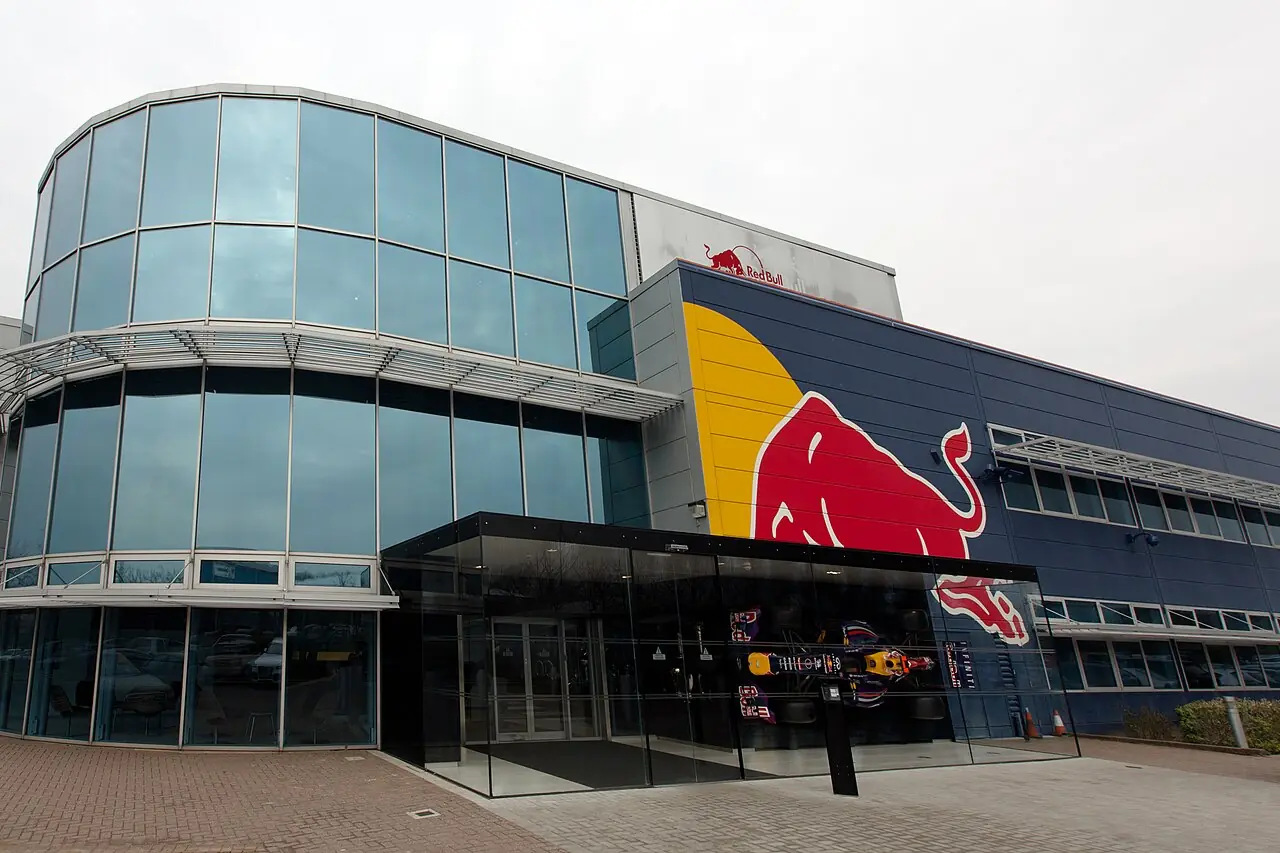
So far the most prominent case remains Red Bull. For 2021 the team exceeded the cap by £1.864m, or 1.6%, and received a $7m fine and a 10% cut in its aerodynamic testing allowance.1617 How that came about and what followed is covered in a separate story on Red Bull's 2021 overspend.
The following years were quieter. For 2022 all ten teams stayed within the limit, then set at $140m.1one source: 18 For 2023 the FIA again found all ten in compliance.1one source: 19 For 2024 nine teams received clean findings, while Aston Martin was found to have committed a procedural breach "of a very minor nature", without exceeding the cap itself.2011
Lodi sums up the FIA's approach without diplomacy:
"...rules are there to be respected and we have to do what we have to do."1one source: 15
Sources
Footnote numbers are the numbers of the sources in this list.
- FIA, 2015-10-26: “FIA Formula 1 World Championship – Cost reduction”
- Autosport, 2019-10-31: “F1's new 2021 rules finally approved”
- Motorsport.com, 2019-10-31: “Cost cap has 'teeth' and breaches could cost title – Brawn (Adam Cooper)”
- FIA, 2020-03-06: “2021 FIA Formula One Financial Regulations, published on 6 March 2020”
- FIA, 2020-05-27: “World Motor Sport Council approves changes to 2020, 2021 and 2022 FIA Formula 1 Regulations”
- Formula1.com, 2020-05-27: “The 2021 F1 cost cap explained – what has changed and why”
- FIA, 2021-04-30: “2021 Formula 1 Financial Regulations, Issue 5”
- FIA, 2024-12-11: “Formula 1 Financial Regulations, Issue 22”
- FIA, 2022-07-08: “FIA Formula 1 Commission Meeting 8 July 2022 – Statement”
- Autosport, 2022-07-09: “F1 agrees to budget cap increase for 2022 amid inflation pressure (Luke Smith)”
- Motor Sport Magazine, 2025-10-28: “What is Formula 1's cost cap? What it covers, penalties and more”
- FIA, 2026-06-25: “FIA 2026 F1 Regulations – Section D: Financial Regulations (F1 Teams), Issue 07”
- RacingNews365, 2025-09-24: “FIA reveal concessions to F1 teams ahead of major cost cap change”
- FIA, 2024-10-17: “Future regulations across multiple categories confirmed during the World Motor Sport Council”
- FIA, 2023-07-20: “FIA Insights: Counting the cost – how the FIA is managing Formula 1's Financial Regulations”
- Formula1.com, 2022-10-28: “Red Bull enter Agreement with FIA over breach of 2021 Financial Regulations”
- Autosport, 2022-10-28: “FIA hands Red Bull $7m fine, aero testing reduction for cost cap breach (Luke Smith)”
- Formula1.com, 2023-09-05: “FIA confirm all 10 F1 teams operated below cost cap in 2022”
- FIA, 2024-09-11: “FIA completes its review of compliance with the 2023 FIA Formula 1 Financial Regulations”
- FIA, 2025-10-28: “FIA completes its review of compliance with the 2024 FIA Formula 1 Financial Regulations”
- FIA, 2026-05-07: “FIA 2026 F1 Regulations – Section E: Financial Regulations (Power Unit Manufacturers), Issue 05”
- Formula1.com, 2022-06-07: “Williams fined USD25,000 for procedural breach of Financial Regulations”