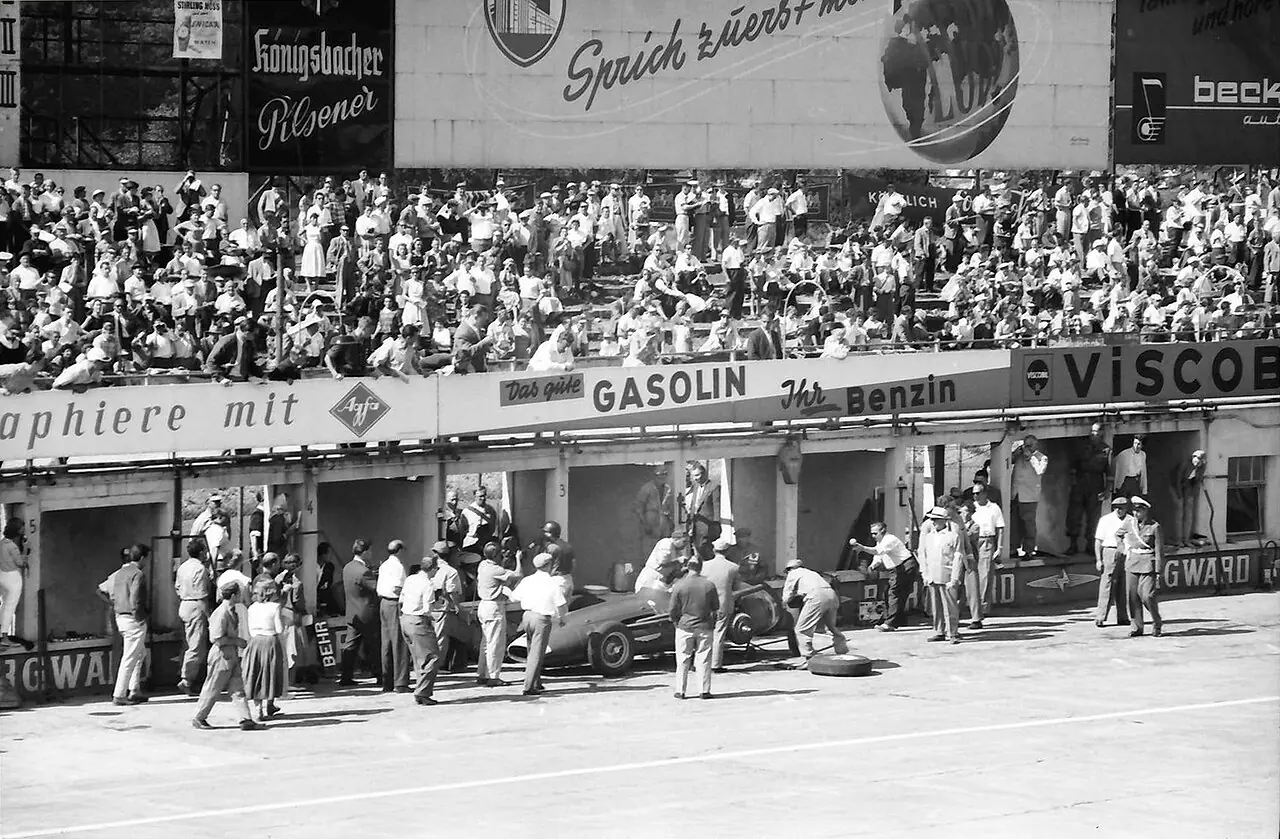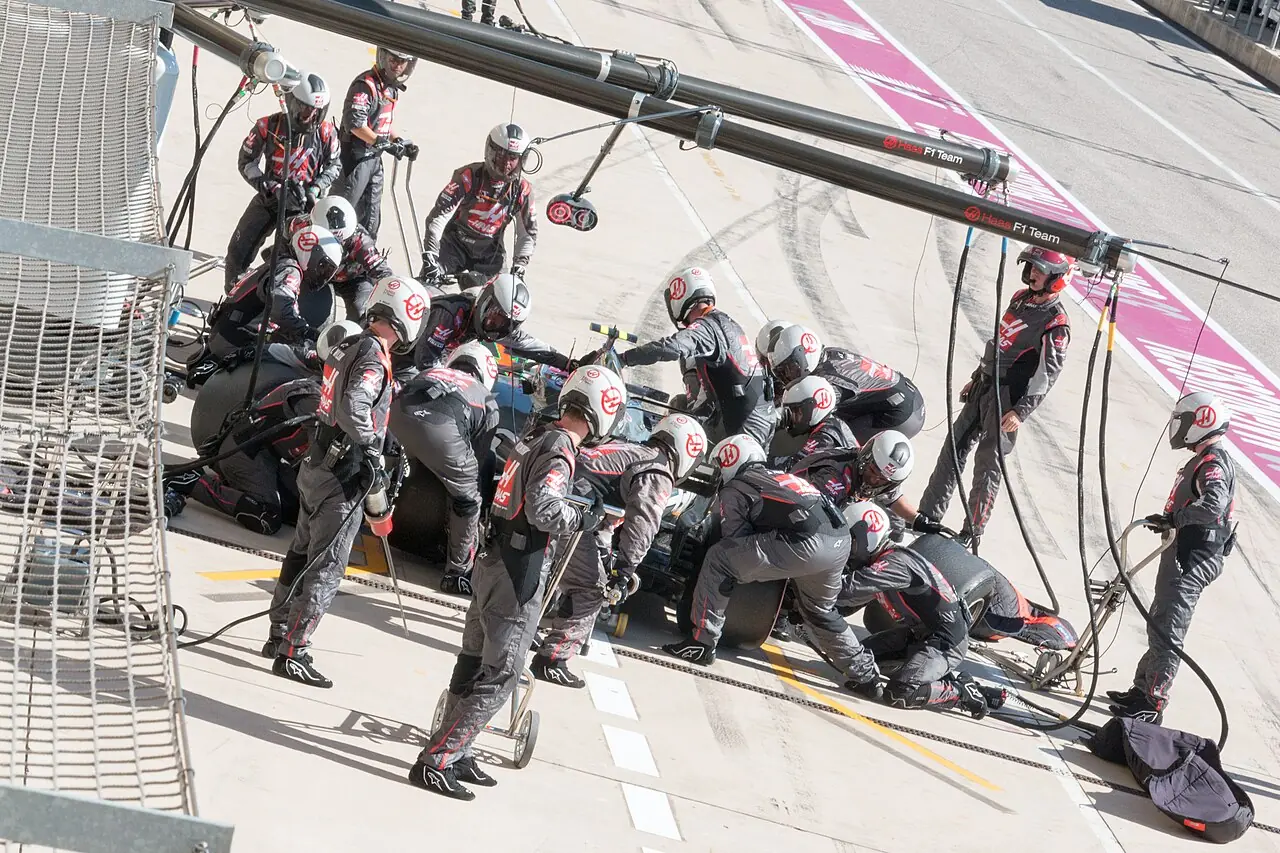
Today the name of a Formula 1 team often sounds like an ad break: Oracle Red Bull Racing, McLaren Mastercard, Aston Martin Aramco. Half a century ago that was impossible. Here is how advertising got onto the cars, why tobacco companies paid for it for decades and who pays now.
The colours of nations
Before sponsor liveries, cars were told apart by nationality. Italy raced in red, France in blue, Britain in green and Germany in white, a tradition that goes back to the 1900s.1one source: 1 The colour belonged to the country, not the company, and one episode shows it. At the last two rounds of 1964 Enzo Ferrari, reportedly in protest over a homologation dispute, entered his cars in the blue and white of North American Racing Team, Ferrari's American importer.12 It was in these colours that John Surtees completed his 1964 championship-winning season.225
1968: the door opens
Towards the end of 1967 the FIA's Commission Sportive Internationale (CSI) allowed advertising on cars. It was a response to the official withdrawal from racing of sponsors such as Esso. The 1968 season was the first in which the rules allowed sponsor colours.31
Lotus were not the first to take advantage. On 1 January 1968, at the South African Grand Prix at Kyalami, the Rhodesians John Love in a Repco-engined Brabham and Sam Tingle in an LDS started in the colours of the Gunston cigarette brand. Team Gunston had been formed in late 1967 for local races in southern Africa.1one source: 34
The big story, though, was Lotus. In February 1968 Motor Sport reported that Colin Chapman had struck a deal with the tobacco firm John Player & Sons, whose money would replace the income lost when Esso withdrew.1one source: 53 Denis Jenkinson described the change:
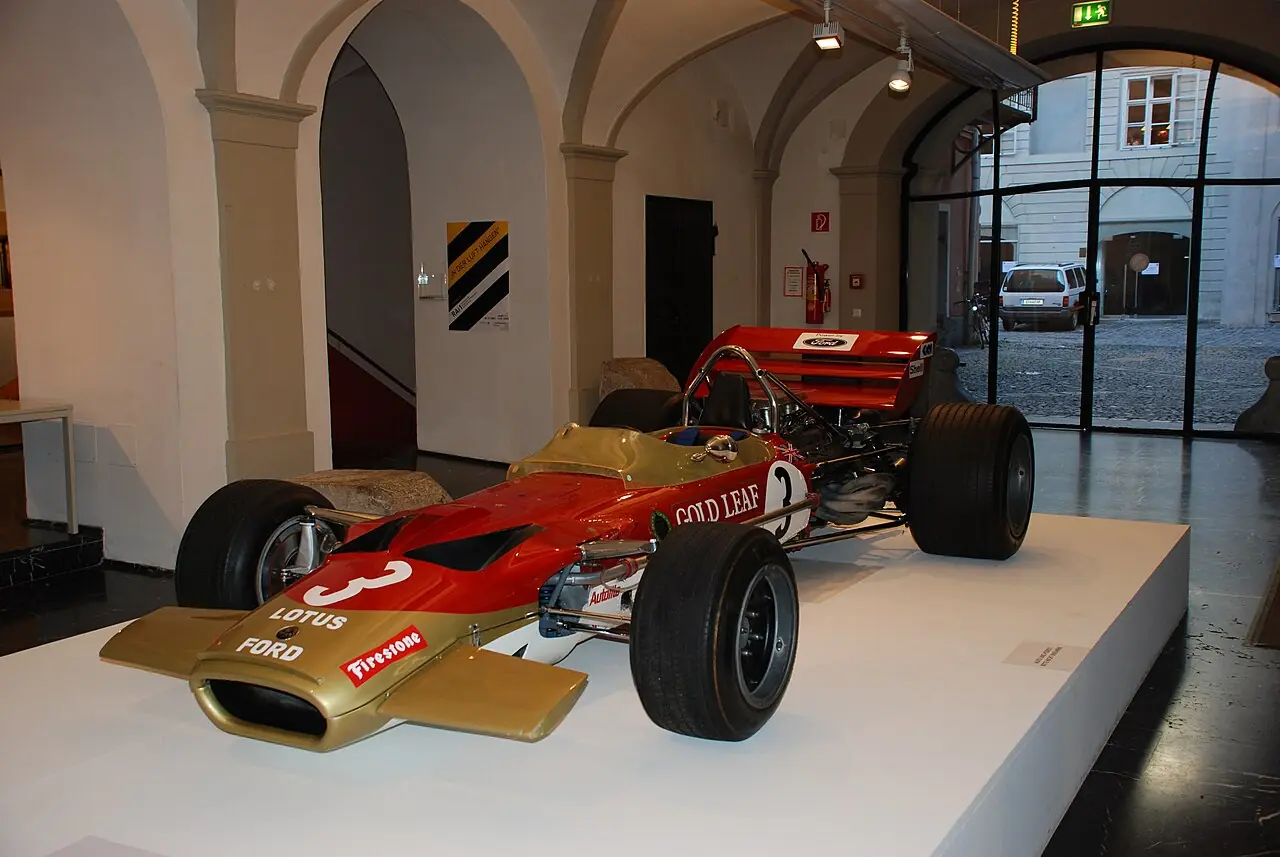
"What we have known as Team Lotus for many years is now called the “Gold Leaf Lotus Team” … and the cars are to be painted red, white and gold like packets of twenty."1one source: 5
In the same breath he wondered how the team would get round the FIA's international colour scheme.1one source: 5 It did: that year Lotus dropped its green for the red and gold of its new title sponsor.245
The new livery first appeared on track in the Tasman Series early in 1968. Jim Clark's car was repainted for the race at Wigram airfield in Christchurch, about three weeks after Kyalami.1one source: 36 Motor Sport itself gives different figures for the value of the deal in different articles: £95,000 for the season in one, "initially" £85,000 in another.?sources disagree: 67
In the World Championship, Gold Leaf Team Lotus made its debut at the second round of the season, the Spanish Grand Prix at Jarama on 12 May 1968. Graham Hill won it.89103
The tobacco era
Why tobacco? The industry was under pressure: in Britain cigarette advertising was banned from television from August 1965 (cigars were still advertised until 1991), and manufacturers looked for other outlets. For Player's, as Motor Sport puts it, Formula 1 was "a quicker, much cheaper way to gain exposure than by placing advertising around the world".1one source: 6
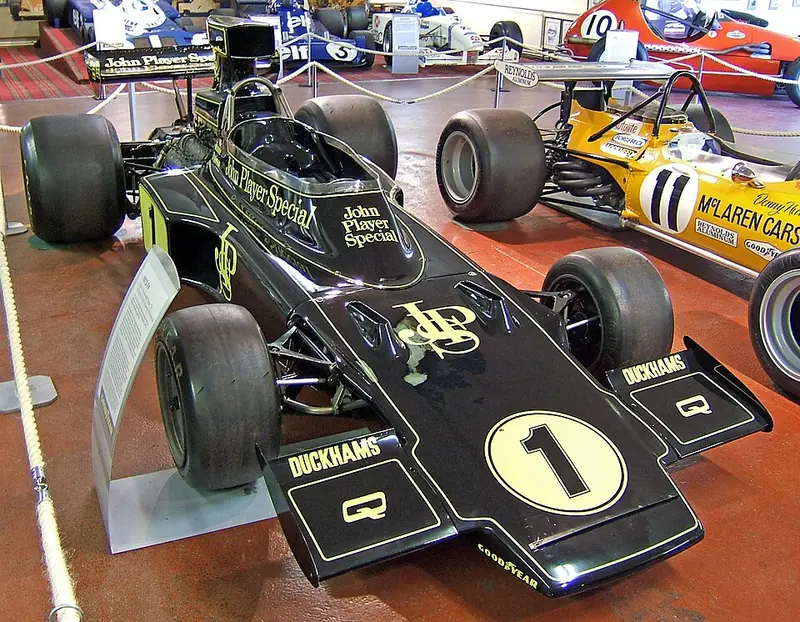
1972 gave Formula 1 two of its best-known tobacco liveries. Lotus repainted its cars in the black and gold of Imperial Tobacco's new John Player Special brand.711 The black-and-gold car took its first Grand Prix win at the 1972 Spanish Grand Prix, won by Emerson Fittipaldi.1112 That same year Marlboro's colours appeared on a Formula 1 car for the first time, on a BRM.1314
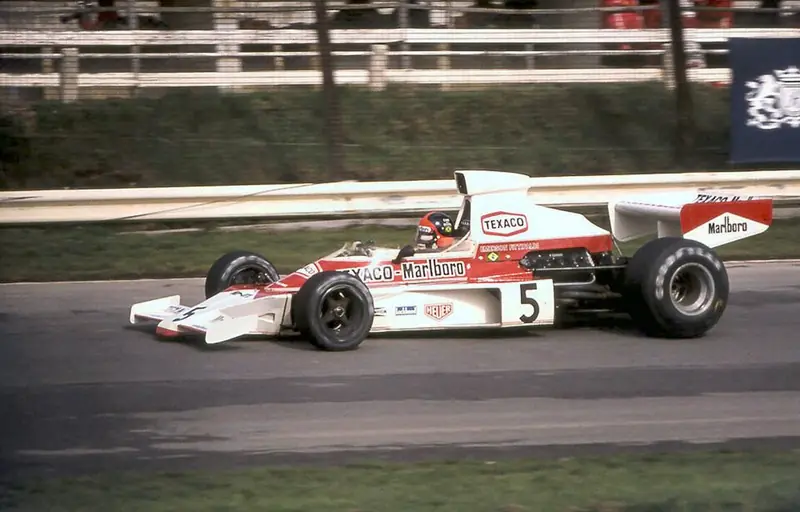
From 1974 Marlboro moved to McLaren, and the partnership lasted until the end of 1996. The last race in red and white was the Japanese Grand Prix on 13 October 1996, and journalist David Tremayne called the partnership the longest-enduring tie-up between one marque and one sponsor.1314 Over those years Marlboro McLaren won nine drivers' championships and seven constructors' titles.1one source: 14 Marlboro then concentrated on Ferrari: it had sponsored the Scuderia since 1984 and became its title sponsor from 1997.1one source: 1513 The sums were huge. According to Motor Sport, in the late 1990s Philip Morris was supplying budgets of more than £70m, and later Marlboro leased the sponsorship rights for up to £155m a year and sublet space on the car to other brands.1one source: 13
Bans and barcodes
The key document was an EU directive. Directive 2003/33/EC of 26 May 2003 banned tobacco sponsorship of events involving several EU member states or having cross-border effects. Member states had to bring it into national law by 31 July 2005 at the latest, and the European Commission explicitly cites Formula 1 races among the events concerned.1617
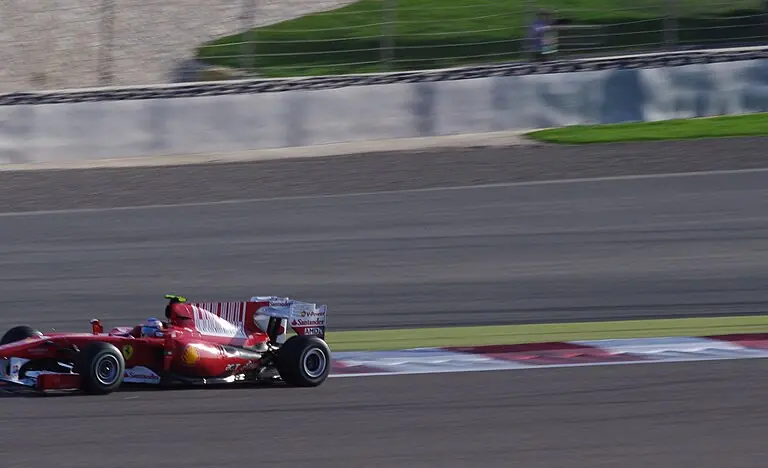
The teams gave in one by one. By 2008 McLaren, Renault and Honda had already dropped their tobacco sponsors, and that season Ferrari raced without Marlboro logos even in Bahrain, where the law would have allowed them. Yet the contract with Philip Morris ran until 2011.1one source: 18 The link was kept alive through hints: a Marlboro-style chevron and a barcode on the engine cover.1319
In May 2010, after accusations of subliminal Marlboro advertising, Ferrari removed the barcode from the Spanish Grand Prix in Barcelona onwards. The team said it wanted to "remove all speculation" about the so-called barcode.1920
The last chapter began late in 2018, when a Philip Morris brand called Mission Winnow appeared on the Ferraris. At the 2019 Australian Grand Prix the logos had to come off amid an investigation by Australian health authorities.1one source: 21 In 2022 Mission Winnow disappeared from the cars, and Motor Sport described it as the end of Philip Morris's title sponsorship of Ferrari.1one source: 1315
Who pays now
Tobacco has been replaced by tech companies, banks and payment firms, and energy groups. In the FIA's 2026 classification the teams race as Oracle Red Bull Racing, Scuderia Ferrari HP, McLaren Mastercard F1 Team, Aston Martin Aramco, Atlassian Williams F1 Team, Audi Revolut F1 Team, BWT Alpine, Visa Cash App Racing Bulls and TGR Haas F1 Team. Mercedes-AMG Petronas Formula One Team and Cadillac Formula One Team complete the list.1one source: 22
McLaren returned to having a title sponsor in 2026, when the team became McLaren Mastercard. Before that, it had last raced with a title partner in 2013, as Vodafone McLaren Mercedes.2322
From red, white and gold "like packets of twenty" to banks and cloud services, almost six decades have passed. The principle remains the one Gunston and Gold Leaf discovered: a car shown on television around the world is a very expensive and very visible billboard.
Where the sources disagree
Sources
Footnote numbers are the numbers of the sources in this list.
- Formula1.com: “From yellow, to blue and burgundy: why Scuderia Ferrari only race in red across Formula 1…”
- Motor Sport Magazine, 2025-07-19: “The times Ferrari raced in F1 without their iconic red livery (James Elson)”
- Motor Sport Magazine, 2019-03-07: “When F1 had its first tobacco spat (Paul Fearnley)”
- Motor Sport Magazine, 1997-04: “Fag cash (letter from David Cole)”
- Motor Sport Magazine, 1968-02: “Continental Notes, February 1968 (Denis Jenkinson)”
- Motor Sport Magazine, 2015-07: “How F1 picked up the habit”
- Motor Sport Magazine, 2022-10: “Smoke and heat: Lotus in the JPS days”
- Motor Sport Magazine, 1968-06: “Spanish Grand Prix race report (Jarama, 12 May 1968)”
- Motor Sport Magazine, 1968-06: “Notes on the Cars at Jarama”
- Jolpica (Ergast): “Jolpica F1 API: 1968 season calendar and results”
- Goodwood Road & Racing, 2020-02-25: “Five times the Lotus 72 won against the odds (Paul Fearnley)”
- Jolpica (Ergast): “Jolpica F1 API: 1972 race winners”
- Motor Sport Magazine, 2022-03: “Marlboro in Formula 1: King size allies (Mark Hughes)”
- GrandPrix.com, 2001-02-21: “News feature: White and red all over (David Tremayne)”
- Motor Sport Magazine, 2022-02-03: “Up in smoke: end of the Marlboro money that lit up F1 (Mark Hughes)”
- legislation.gov.uk (EU-derived legislation), 2003-05-26: “Directive 2003/33/EC of the European Parliament and of the Council of 26 May 2003 (tobacco advertising and sponsorship)”
- European Commission (DG Health): “Ban on cross-border tobacco advertising and sponsorship”
- Autocar, 2008-04-17: “Formula One drops all cigarette ads”
- Autosport, 2010-05-06: “Ferrari removes barcode design (Jonathan Noble)”
- The Irish Times, 2010-05-06: “Ferrari to remove 'subliminal' advert from livery”
- Autosport, 2019-03-05: “Ferrari F1 team removes Mission Winnow branding for Australian GP (Jamie Klein, Franco Nugnes)”
- FIA: “2026 Classifications (constructors' standings)”
- Autosport, 2025-08-28: “McLaren banks Mastercard as 2026 F1 title partner (Filip Cleeren)”
- Formula1.com: “GALLERY: Going for Gold – F1's greatest gilt-edged liveries”
- Jolpica (Ergast): “Jolpica F1 API: 1964 drivers' standings”